



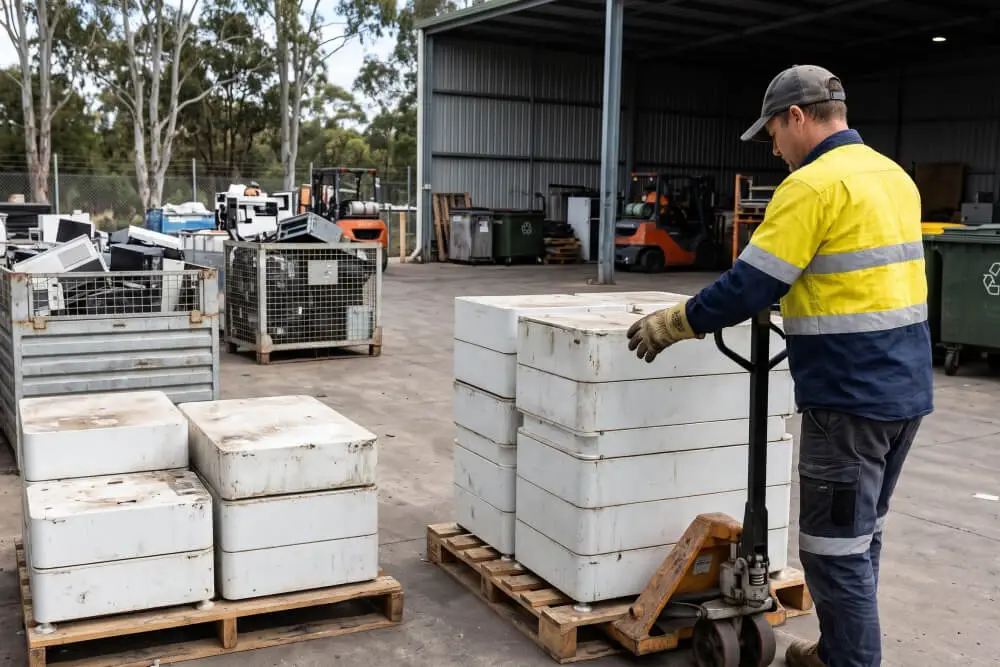
Solar batteries are becoming an important part of Australia's renewable energy journey. They help households store excess solar electricity, manage energy use, and reduce reliance on the grid.
But have you ever wondered what happens when a solar battery reaches the end of its working life?
Like other electrical equipment, home batteries don't last forever. Eventually, they may need replacing, and disposing of them requires more care than simply putting them out with regular household waste.
With more Australian households investing in battery storage, understanding how old batteries are handled, recycled and potentially reused is becoming increasingly important.
Let's look at what happens when a solar battery reaches the end of its life.
How Long Does a Solar Battery Last?
Before discussing recycling, it's useful to understand how long a battery typically lasts.
The lifespan depends on its chemistry, usage, operating conditions, maintenance, and manufacturer specifications.
According to Australian Government guidance, the average lifespan of a lithium-ion home battery is around 10–15 years. Lead-acid batteries generally last around 5–10 years. These are averages, not guaranteed replacement dates.
Several factors can influence battery performance over time:
- Charging and discharging: Frequent daily cycling can contribute to battery wear.
- Temperature: Operating outside the recommended temperature range can affect battery performance.
- Usage patterns: Heavy usage may influence how quickly a battery reaches the end of its useful life.
- Maintenance and monitoring: Following manufacturer recommendations can help identify performance issues.
A reduction in battery performance doesn't automatically mean replacement is necessary. A professional assessment can help determine whether the battery needs repair, servicing, or replacement.
What Happens When a Solar Battery Reaches the End of Its Life?
An old battery doesn't necessarily need to become waste immediately.
Depending on its condition, chemistry and manufacturer's recommendations, it may be suitable for further assessment, refurbishment or material recovery.
Here's a simplified look at the possible end-of-life process.
| Stage | What Happens |
|---|---|
| 1. Battery assessment | Its condition and remaining performance are evaluated. |
| 2. Safe removal | A suitably qualified professional disconnects and removes the battery. |
| 3. Collection and transport | The battery is directed to an appropriate authorized collection or recycling provider. |
| 4. Sorting and processing | The battery is assessed and processed according to its chemistry and condition. |
| 5. Material recovery | Suitable materials are recovered for potential use in manufacturing and other applications. |
The exact process varies depending on the battery type, condition, and recycling facility.
The goal is to recover useful materials while managing safety and environmental risks.
Can Old Solar Batteries Be Recycled?
Yes, many battery components and materials can be recovered through specialized recycling processes.
However, recycling methods differ depending on battery chemistry.
For example:
Lithium-Ion Batteries
can be processed to recover lithium, cobalt, nickel, and other valuable materials.
Specialist recycling processes can recover materials such as lithium, nickel, cobalt, copper and aluminium, depending on the battery chemistry and processing method.
The recovered materials can potentially be used in the production of new products and batteries.
Lead-Acid Batteries
Lead-acid batteries have established recycling processes. Their lead and plastic components can be recovered and used in manufacturing new products.
The important point is that not every battery can be recycled through the same collection service. Home energy storage batteries require appropriate handling and specialist recycling arrangements.
Why Should Solar Batteries Never Go to Household Bins?
This is one of the most important things homeowners should understand.
Solar batteries can contain stored electrical energy and materials that require specialized handling. If damaged, crushed or handled incorrectly, they can create serious fire and safety risks.
Lithium-ion batteries can experience thermal runaway, which may result in intense fires.
Putting an old battery into general waste or household recycling can expose waste collection of workers, transport operators and recycling facilities to unnecessary risks.
Remember:
- Never place a solar battery in household waste.
- Never put it in a standard household battery drop-off bin.
- Never attempt to disconnect or remove it yourself.
- Never transport an old home battery without professional guidance.
The Australian Government advises homeowners to contact their battery provider or an accredited installer for safe disposal options.
Australian government advice perWhere Can Australians Recycle Old Solar Batteries?
Finding the right recycling pathway is important.
While Australia's B-cycle program provides drop-off locations for many small household batteries, these locations are not generally intended for large home energy storage batteries.
For a residential solar battery, homeowners should:
- Contact the original battery manufacturer or supplier.
- Ask the solar retailer or installer about its battery take-back arrangements.
- Confirm which authorized recycler accepts the specific battery model and chemistry.
- Arrange professional disconnection, removal, and collection.
- Check whether any collection or recycling fees apply.
Recycling options can vary between states and territories, so it's important to confirm local arrangements before making plans.
Important: Don't take a home storage battery to an ordinary household battery collection point unless the provider specifically confirms it accepts that type of battery.
Can Old Solar Batteries Be Reused Instead of Recycled?
In some cases, yes.
A battery that is no longer suitable for its original household application may still have potential for second-life use.
For example, certain used batteries may be assessed for less demanding energy storage applications.
However, reuse is not suitable for every battery. Its remaining capacity, safety, condition, compatibility, and manufacturer's requirements must all be considered.
A battery that is damaged or no longer safe to operate should not be reused simply to extend its life.
Professional testing and assessment are essential before considering any second-life application.
What Should You Check Before Buying a Solar Battery?
Battery recycling is something homeowners should consider before installation, not just when replacement becomes necessary.
When comparing solar battery systems, look beyond capacity, price, and warranty.
Here are five useful questions to ask your battery provider:
| What to Ask | Why It Matters |
|---|---|
| What is the expected battery lifespan? | Helps you understand its likely operating life. |
| Does the manufacturer offer a take-back program? | Clarifies whether an end-of-life return option exists. |
| Can the battery be recycled in Australia? | Helps identify available local recycling pathways. |
| Does the battery contain recycled materials? | Provides information about material sourcing. |
| Are there any removal or recycling fees? | Helps you plan for future ownership costs. |
It's also worth asking for information about the battery's chemistry, warranty conditions, and end-of-life management arrangements.
A little planning today can make responsible battery disposal easier in the future.
Australia's Growing Need for Battery Recycling
As more households adopt solar and battery storage, responsible end-of-life management will become increasingly important.
Australia needs appropriate collection networks, specialist recycling facilities and clear arrangements between manufacturers, retailers, installers and recyclers.
The NSW Government, for example, is introducing a mandatory battery product stewardship scheme to improve battery collection, recovery, and safe recycling. This reflects the growing focus on managing battery waste responsibly. NSW government per
Better recycling arrangements can help:
- Reduce the risk of batteries entering general waste.
- Recover valuable materials for further use.
- Improve battery collection and transport practices.
- Support responsible product lifecycle management.
- Reduce the need for newly sourced raw materials where recovered materials can be used.
Battery recycling infrastructure and arrangements are still developing, but responsible disposal is already an important part of the solar energy industry.
Conclusion
Responsible Energy Goes Beyond Installation
Solar batteries offer Australian households a practical way to store renewable electricity and manage their energy use. But their environmental value should also be considered beyond their operating years.
From professional removal to appropriate recycling and material recovery, every stage of a battery lifecycle matters.
When choosing a solar battery, don't just ask how much energy it can store. Ask how long it is expected to last, what happens when it reaches the end of its life, and whether a suitable recycling pathway is available.