


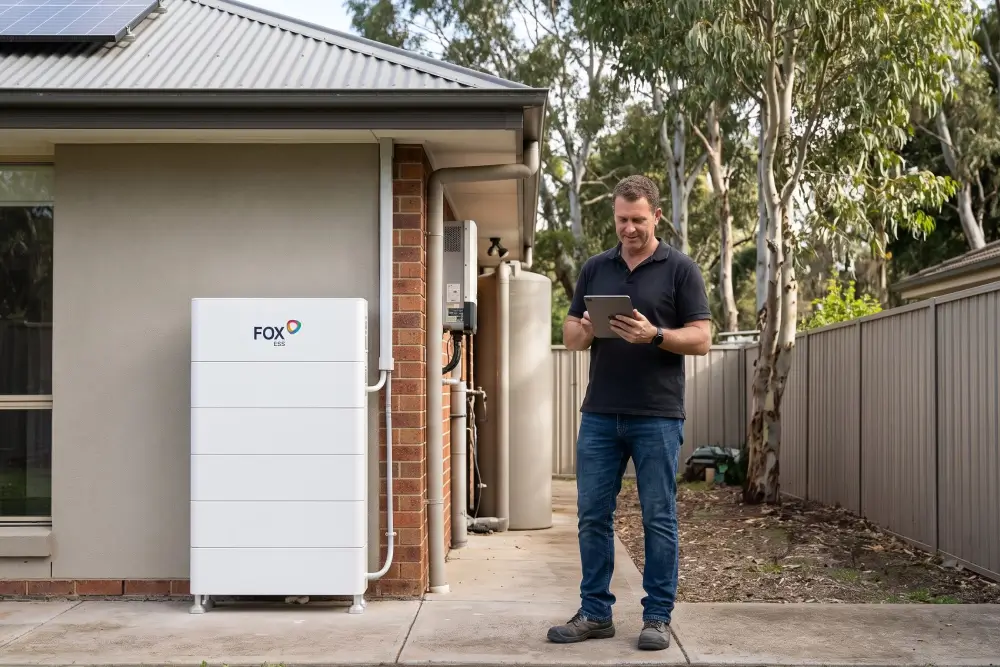
Australia’s home battery market is growing as more households look for ways to manage electricity costs and make better use of rooftop solar. Government incentives have helped make battery storage more accessible, but the support available is changing.
Under the Australian Government’s Cheaper Home Batteries Program, the discount calculation is scheduled to reduce again from 1 January 2027. For homeowners considering a solar battery, understanding what this change means can help them plan their next steps.
So, should you install a battery before the next reduction, or take more time to compare your options? Here’s what Australian homeowners need to know.
What Is Changing with the Battery Rebate?
The Cheaper Home Batteries Program provides an upfront discount on eligible battery installations through the Small-scale Technology Certificates (STCs) mechanism.
From 1 May 2026, the program moved to a revised calculation method, with the discount factor scheduled to decrease every six months.
The next scheduled change is:
| Period | STC Factor |
|---|---|
| May–December 2026 | 6.8 |
| January–June 2027 | 5.7 |
| July–December 2027 | 5.2 |
These figures are the program’s STC factors, not dollar amounts or fixed discount percentages. The actual discount depends on eligible battery capacity, the applicable calculation rules, and the value of the certificates.
The program is scheduled to continue until January. The change is a reduction in the discount calculation, not the end of the entire scheme.
Why Could the Next Reduction Matter?
The discount helps reduce the upfront cost of installing an eligible battery.
When the calculation factor decreases, a comparable battery installation may receive a smaller government-funded discount, all else being equal.
For homeowners, this can affect the overall price of a proposed system.
However, the final difference will depend on several factors:
- The battery’s eligible usable capacity
- The battery model and installation cost
- The value of the certificates
- Installer pricing and any applicable fees
- Whether the installation meets program requirements
A lower discount does not automatically mean a battery is a poor investment. The potential value still depends on your household’s electricity use, solar generation, electricity tariff, and the total cost of the system.
Should You Install a Battery Before January?
If you are already considering a battery, it may be worth reviewing your options before the next scheduled reduction.
But rushing into a purchase without understanding your needs can lead to choosing a system that is too large, too small or unsuitable for your energy usage.
Before deciding, consider these three steps.
1. Review Your Electricity Usage
Check your electricity bills and identify when your household uses the most power.
If your household consumes substantial electricity in the evening, storing excess daytime solar energy could help reduce your reliance on grid electricity during those hours.
2. Compare Battery Quotes
Request quotes from reputable providers and compare the complete installed price, not just the advertised rebate.
Ask each provider to clearly show:
- The battery model and usable capacity
- The government discount included in the quote
- Any administration fees or additional installation costs
- The expected energy savings and payback period
- Warranty conditions and after-sales support
Comparing like-for-like quotes can help you understand whether the proposed system offers value for your home.
3. Confirm the Installation Timeline
The applicable STC factor is determined by the relevant installation and certification date under the program rules. Signing a contract or paying a deposit before January does not guarantee the current discount.
Discuss the expected installation date with your provider and make sure the schedule is realistic.
How Can a Solar Battery Help Your Home?
While rebates can reduce the upfront cost, the long-term benefits of a battery depend on how well it suits your household.
| Benefit | How It Helps |
|---|---|
| Store excess solar energy | Saves surplus daytime solar electricity for later use. |
| Reduce grid electricity use | Uses stored energy when solar generation is low. |
| Manage peak usage | May reduce grid consumption during higher-tariff periods. |
| Improve energy flexibility | Gives households more control over when they use stored electricity. |
| Backup power | Can power selected circuits during outages if the system is configured for backup. |
Actual results vary with system design, household consumption, electricity tariffs, and battery operation. A battery should be sized around your energy needs rather than the rebate alone.
What If You Already Have Solar Panels?
You may not need to replace your existing solar system to add a battery.
Eligible batteries can be installed with existing solar PV systems, provided the installation meets the program’s requirements. Your installer should check the compatibility of your existing inverter, solar system, and proposed battery before recommending an upgrade.
If your existing system generates more electricity than your household uses during the day, a battery may help you use more of that energy after sunset.
If your solar system produces little surplus electricity, you may need to assess whether adding a battery makes financial sense.
Is the Cheaper Home Batteries Program Ending?
No. The scheduled January reduction does not mean the entire program is ending.
The Australian Government’s published schedule sets out further reductions through 2030. The program is designed to adjust support over time in line with changes in battery costs.
This is why it is important to distinguish between a reduction in the discount and the end of the program.
Homeowners should check out the latest official eligibility requirements before committing an installation.
Before You Choose a Battery, Look Beyond the Rebate
The rebate is only one part of the decision.
A well-planned battery installation should take into account your electricity consumption, solar generation, inverter compatibility, battery capacity, warranty and expected savings.
At Solar Secure, the aim is to help homeowners understand their solar and battery options so they can make informed decisions based on their household requirements.
If you are considering a battery, compare your options, ask for a clear breakdown of the discount, and confirm the likely installation timeline before proceeding.
Conclusion
The next scheduled reduction in the Cheaper Home Batteries Program discount begins on 1 January 2027. For homeowners planning a battery installation, reviewing quotes and understanding the timing now may help them make a more informed decision.
However, the right battery is not necessarily the biggest one or the one with the largest advertised discount. It is a system that suits your energy usage, budget, and long-term goals.
Understand the rebate. Compare your options. Choose a battery that works for your home.