



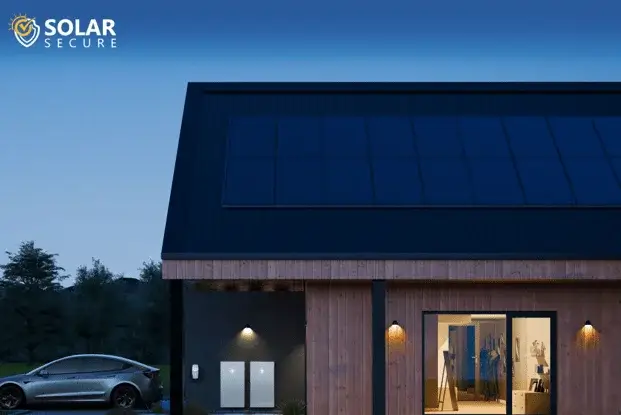
Powerwall 3 is a fully integrated solar and battery system, designed to accelerate the transition to sustainable energy. Customers can receive whole home backup, cost savings, and energy independence by producing and consuming their own energy while participating in grid services. Once installed, customers can manage their system using the Tesla App to customize system behavior to meet their energy goals. Powerwall 3 achieves this by supporting up to 20 kW DC of solar and providing 11.5 kW AC of continuous power per unit. It has the ability to start heavy loads up to 150 A LRA, meaning a single unit can support the power needs of most homes. Powerwall 3 is designed for mass production, fast and efficient installations, easy system expansion, and simple connection to any electrical service.
Tesla Powerwall 3 Features and Specifications
Power Output
The Tesla Powerwall 3 specifications offer a major power upgrade with a maximum continuous discharge of 11.04 kW, This 120% increase allows the Powerwall 3 to handle high-energy appliances like air conditioners and heat pumps, making it highly effective during power outages.
Storage Capacity
The Tesla Powerwall 3 offers 13.5 kWh of storage capacity. If your household uses 20-25 kWh per day, a single Powerwall 3 can deliver 6 to 8 hours of power during an outage. Actual battery backup system duration depends on your specific energy usage and consumption habits.
Integrated Solar Inverter
One of the most notable features of the Powerwall 3 is the inclusion of a built-in solar inverter, capable of supporting up to 20 kW of DC solar input. This feature simplifies installation for a new solar and battery system by reducing the need for extra hardware, potentially lowering costs. However, if you already have a solar system, this integrated inverter doesn’t offer you any additional benefit.
Round Trip Efficiency
The Powerwall 3 offers a Solar to Home/Grid efficiency of 97.5%. If power is going via the battery (Solar to Battery to Home/Grid) the efficiency rating is 89%. These figures are comparable with many of the leading battery options on the market.
Installation and Expandability
Tesla has introduced design improvements in the Powerwall 3 to make installation faster and more cost-effective, including a built-in DC isolator and reusable packaging. Additionally, Tesla plans to launch “Powerwall 3 Energy Expansions” in early 2025 allowing homeowners to expand storage capacity without significant additional infrastructure. Each Powerwall 3 can be expanded with up to three Energy Expansions, enabling a total system configuration of up to 16 units (4 Powerwall 3s and 12 expansions), providing significant scalability for growing energy needs.
Battery Chemistry
Tesla has confirmed that the Powerwall 3 uses Lithium Ferro Phosphate (LFP) chemistry, moving away from the Lithium Nickel Manganese Cobalt Oxide (NMC) used in the Powerwall 2. This change enhances safety, durability, and environmental sustainability by eliminating cobalt, a toxic and expensive component. However, LFP batteries typically have a lower energy density compared to NMC batteries.
LFP chemistry has been widely adopted as the leading option for most solar battery manufacturers on the market.
Off-Grid Capabilities
The Tesla Powerwall 3 is primarily designed for grid-tied applications in Australia. While it can provide backup power during outages, it is not fully optimised for off-grid use. Tesla has not officially released full off-grid functionality for this model, and any potential future updates remain uncertain.
Backup Gateway
The Backup Gateway or more simply the backup ‘switchboard’ ensures homeowners can maintain power during outages and effectively manage their energy use.
Some battery manufacturers have this capability built into the battery. Tesla charge an extra charge for their Gateway, a notable addition to the system's overall cost.
Benefits of the Tesla Powerwall 3
- Integrated Solar Inverter : The Powerwall 3 comes with an 11.04 kW built-in hybrid solar inverter capable of supporting up to 20 kW of solar panels. This reduces the need for separate equipment and simplifies the installation process.
- Scalable Storage Solution : The Powerwall 3 introduces DC-coupled battery expansion units, allowing homeowners to expand storage capacity over time. Starting in 2025, the system will support up to 16 units (4 Powerwall 3s and 12 expansion units), offering flexible and cost-effective scalability for growing energy needs.
- Enhanced Power Output : With a continuous power output of 11.04 kW, the Powerwall 3 can handle larger households and more demanding energy needs, supporting high-demand appliances like air conditioners and heat pumps even during outages.
- High Peak Power Rating : The system can manage high inrush currents up to 15kW, making it ideal for starting large appliances without grid support. This is particularly useful for homes with significant energy needs.
- Improved Installation Efficiency : Tesla has made design improvements that speed up installation and reduce costs, including the addition of a built-in DC isolator and reusable packaging. Certified installers have reported being able to complete two installations per day compared to one with the Powerwall 2.
Tesla Powerwall 2 vs Powerwall 3 Comparison
| Feature | Tesla Powerwall 2 | Tesla Powerwall 3 | Consumer Relevance |
|---|---|---|---|
| Usable Storage Capacity | 13.5 kWh | 13.5 kWh | Both units provide the same usable energy storage, making them suitable for similar usage scenarios. |
| Continuous Power Output | 5 kW (charge and discharge) | 11.04 kW (5 kW charge & 11.04 kW discharge) | Powerwall 3 offers more than double the discharge power output, ideal for powering larger appliances and handling higher energy demands. |
| Peak Power Rating | 7 kW | 15 kW | The higher peak power allows Powerwall 3 to handle larger startup loads from heavy-duty appliances. |
| Integrated Solar Inverter | No | Yes (supports up to 20 kW DC input, limited to 5 kW charging) | Powerwall 3 simplifies installation by integrating the solar inverter, reducing additional equipment requirements. |
| Solar Panel Compatibility | Requires a separate inverter | Direct integration with solar panels | Powerwall 3 can connect directly to solar panels, reducing installation cost and complexity. |
| Battery Chemistry | Lithium Nickel Manganese Cobalt Oxide (NMC) | Lithium Iron Phosphate (LFP) | LFP batteries improve safety, lifespan, and thermal stability compared with NMC batteries. |
| Scalability | AC-coupled; multiple units can be stacked | DC-coupled; expandable up to 16 units | Powerwall 3 provides greater flexibility for future energy expansion. |
| Dimensions (H × W × D) | 1150 × 753 × 147 mm | 1099 × 609 × 193 mm | Powerwall 3 has a more compact footprint for easier installation. |
| Weight | 114 kg | 130 kg | Powerwall 3 is heavier, which may affect installation logistics. |
| Backup Gateway | Required (sold separately) | Required (sold separately) | Both models require a Backup Gateway for backup power during grid outages. |
| Bidirectional Charging | No | Yes (not available in Australia yet) | Future-ready feature, although currently unavailable in Australia. |
| Off-Grid Capability | Limited | Limited, with potential future updates | Neither model is fully optimized for off-grid use in Australia. |
| Operating Temperature | −20°C to 50°C | −20°C to 50°C | Both operate across the same temperature range, with Powerwall 3 offering improved thermal performance. |
| Ingress Protection | IP67 (Battery & Power Electronics) | IP67 (Battery & Power Electronics) | Both provide excellent protection against dust and water for outdoor installations. |