



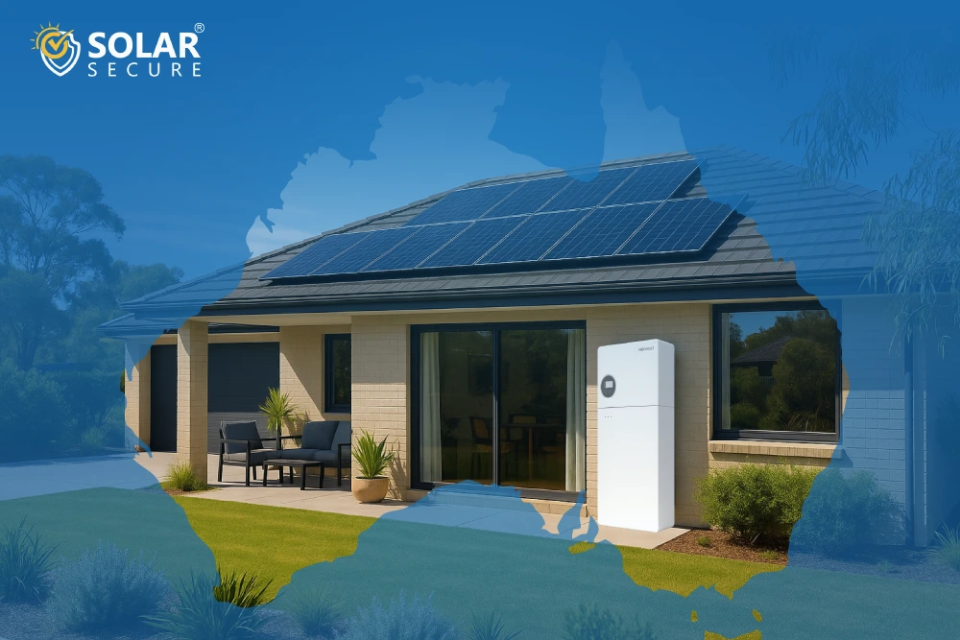
Australia’s solar energy landscape is poised for significant transformation over the coming decade. As one of the sunniest continents on Earth, Australia has long been recognized for its immense solar potential. This blog post will explore the exciting developments, challenges, and opportunities that lie ahead for solar energy in Australia from 2025 to 2035.
Key transformations
Reduced coal dependency: Utility-scale batteries will support the shift away from coal-fired power plants, with some projections indicating a 70% reduction in coal reliance by 2035.
Increased grid stability: By storing solar energy, batteries will provide power when it's needed most, smoothing out the variability of renewable generation and ensuring a reliable supply.
Lower consumer costs: Home battery systems will allow households to maximize their solar savings by storing excess energy for use at night or during peak hours, reducing their reliance on the grid and lowering electricity bills.
Enhanced grid management: The massive influx of distributed energy resources (DERs), such as rooftop solar and batteries, will require smarter grid management systems to coordinate their capabilities and ensure overall system security and stability.
Support for renewable energy growth: Energy storage is the crucial enabler for Australia's continued exponential growth in solar energy adoption, both at the residential and large-scale levels.
Significant investment: Australia has already seen substantial investment in both home and large-scale battery storage, a trend that is expected to accelerate significantly over the next 10 years.
Australia’s Solar Energy Landscape: Where We Stand Today
With over 3.6 million rooftop solar systems installed across Australia, the country is witnessing a solar revolution. Solar power now contributes around 15% of the nation’s electricity needs, with a growing shift towards large-scale solar farms and battery storage solutions.
The Australian government has set ambitious targets to achieve 82% renewable energy generation by 2030, further driving solar adoption. However, to maintain this momentum, innovations and supportive policies will be key.
Emerging Trends in Australia’s Solar Industry
1. Solar Panel Efficiency Improvements
The efficiency of solar panels is improving rapidly. Traditional photovoltaic (PV) panels convert around 18-22% of sunlight into electricity, but newer technologies like perovskite solar cells and tandem solar panels are pushing efficiencies beyond 30%. This means higher energy output with fewer panels, reducing costs and improving adoption rates.
2. Energy Storage Solutions: The Rise of Solar Batteries
As more households and businesses install solar panels, energy storage becomes critical. Lithium-ion battery prices have fallen by over 80% since 2010, making solar batteries more affordable. Neovolt, Sungrow, Pylontech, Sigenergy, AlphaESS, FoxESS, and Growatt are some of the popular battery brands Australians are choosing to store excess solar power for use at night or during cloudy days.
The future will see innovations in solid-state batteries and flow batteries, which promise higher efficiency, longer lifespan, and better safety compared to current lithium-ion technology.
3. Virtual Power Plants (VPPs) & Decentralized Energy Systems
Virtual Power Plants (VPPs) are becoming more common in Australia. These systems connect multiple home solar and battery systems to the grid, allowing households to sell excess energy back to the network and create a more resilient energy system. States like South Australia and Victoria are already running VPP programs, and their expansion could transform the energy market.
4. Floating Solar Farms & Agrivoltaics
Land scarcity is a growing concern for large-scale solar projects. To address this, floating solar farms on reservoirs and lakes are being developed. These systems reduce water evaporation and provide efficient energy generation without using valuable land.
Similarly, agrivoltaics (solar panels combined with agriculture) is an emerging trend where solar panels are installed above crops or grazing lands, providing shade and improving water retention while still generating clean energy.
Artificial intelligence and IoT in solar management
AI and IoT are set to boost solar system efficiency by automating monitoring, optimising energy use, and simplifying maintenance. AI-powered predictive analytics can forecast energy consumption patterns and adjust solar usage accordingly.
Supporting this trend, the Australian government’s National Energy Analytics Research (NEAR) Program is enhancing energy forecasting and policy through detailed data collection and analysis. With over AUD 20 million in funding and in partnership with CSIRO and AEMO, NEAR gathers data across sectors to improve demand forecasting, particularly for peak periods like summer, and to monitor reverse energy flows from rooftop solar PV. By analysing granular data at the household level, NEAR provides insights into tariff impacts across diverse households, furthering regulatory reforms like the Consumer Data Right (CDR), which enables consumers to share data with third-party providers for tailored energy solutions.
This synergy of advanced analytics and solar technology promises Australians a more efficient, adaptable, and consumer-friendly solar landscape in the coming decade.
Then there is also AI and IoT integration with home energy management systems to allow solar energy to be distributed intelligently across household devices. These systems can automate energy usage directing solar power to appliances or charging storage units based on real-time energy availability and consumption needs.
The combination of AI and IoT in solar management will make solar systems more autonomous, responsive, and efficient, driving down costs and enhancing reliability for users.
Vehicle-to-Grid (V2G) Technology
Vehicle-to-Grid (V2G) technology is set to become one of the most exciting additions to Australia’s evolving clean-energy landscape. As electric vehicle (EV) adoption accelerates, millions of parked EVs represent a vast, untapped battery resource. V2G unlocks this potential by allowing EVs not only to draw power from the grid but also to send excess stored energy back when the grid needs support.
For households with solar + home battery systems, V2G adds another layer of flexibility. During the day, rooftop solar can charge both the home battery and the EV at virtually zero marginal cost. Later, during evening peak demand periods, that stored energy can be fed back into the grid or used to power the home, helping reduce strain on the network and lowering energy bills. In regions facing grid instability or rising electricity prices, this capability could be transformative.
On a national scale, V2G could act as a distributed “mega-battery,” improving grid resilience, supporting the integration of more renewable energy, and reducing reliance on expensive peaking power plants. As Australian energy policy continues moving toward decentralisation, V2G stands out as a critical piece of the future energy puzzle, where homes, cars, and the grid operate in harmony to create a cleaner, smarter, and more reliable energy system.
Conclusion
The next ten years promise to be an exciting time for solar energy in Australia. From technological advancements and increased adoption to new applications and business models, the solar landscape is set to transform significantly. While challenges remain, the potential benefits for the environment, economy, and energy security are immense. As Australia continues to harness its abundant solar resources, it is poised to become a global leader in solar energy innovation and implementation.
By embracing solar energy and staying at the forefront of technological developments, Australia can create a more sustainable and resilient energy future. The coming decade will be crucial in shaping this future, and the decisions made now will have long-lasting impacts on the country’s energy landscape.
As we look ahead to 2035, it’s clear that solar energy will play an increasingly central role in Australia’s energy mix. Whether you’re a homeowner considering solar panels, a business looking to reduce energy costs, or simply someone interested in the future of renewable energy, staying informed about these developments will be key to navigating the changing energy landscape.
The solar revolution is well underway in Australia, and the next ten years promise to bring even more exciting changes and opportunities. By embracing this clean, abundant energy source, Australia can secure its position as a global leader in renewable energy and contribute significantly to the fight against climate change.